
Window Tinting Knowledge Hub
Commercial Window Tint Complete Guide
Why Tint Your Commercial Windows?
Everything Bay Area business owners and property managers need to know about commercial window tinting, from reducing HVAC costs and reinforcing glass security to choosing the right film for offices, storefronts, and multi-tenant buildings throughout Contra Costa County and the greater East Bay.
Commercial buildings in Concord and the surrounding East Bay face aggressive solar heat gain, especially properties with large glass facades, floor-to-ceiling windows, or south- and west-facing exposures. Without treatment, solar energy floods through untreated glass, forcing HVAC systems to run in overdrive during Concord’s 90°F+ summer days. Commercial-grade window film rejects up to 86% of total solar energy, stabilizing interior temperatures floor by floor and reducing cooling costs by 20–30% annually according to IWFA studies.
Harsh glare on computer screens, uneven temperatures between sun-facing and interior offices, and hot spots near conference room windows all reduce employee comfort and productivity. Commercial window film eliminates these problems by cutting glare, balancing temperatures, and maintaining consistent, comfortable lighting throughout your workspace. Many of our commercial clients also choose home window tinting after experiencing the difference at the office.
Ultraviolet radiation damages more than skin; it degrades merchandise displays, office furniture, flooring, and sensitive equipment. XPEL commercial films block up to 99% of harmful UV rays, extending the lifespan of your interior assets while creating a healthier, more comfortable environment for employees and customers. The Skin Cancer Foundation recognizes XPEL ceramic films as part of a comprehensive UV protection program.
Retail storefronts along Salvio Street, office parks off Treat Boulevard, and multi-unit buildings throughout Contra Costa County are all potential targets for smash-and-grab theft, vandalism, or weather-related glass failure. Security window film holds shattered glass together, making break-ins significantly harder and reducing the risk of injury from flying shards, a critical safety upgrade for any business with street-level glass.
Commercial Film vs. Window Replacement vs. No Treatment
How professional commercial window film compares to full window replacement and what you’re sacrificing if your building has no treatment.
Commercial Window Film
Full Window Replacement
No Treatment
Commercial Window Tint Benefits
UV Ray Defense
Commercial ceramic window film blocks up to 99% of harmful UVA and UVB radiation. This protects employees from cumulative UV exposure during the workday and prevents merchandise, furniture, flooring, and artwork from fading, cracking, and deteriorating, a critical concern for retail spaces, galleries, and professional offices.
Security & Shatter Resistance
XPEL security films (8-mil and 15-mil options) reinforce glass to hold fragments together during break-in attempts, severe weather, or seismic events. These films meet ANSI Z97.1 Class A impact standards and are suitable for storefronts, ground-floor offices, and any business with high-value inventory behind glass.
Asset Preservation
UV damage to commercial interiors is cumulative and expensive to repair. Window film acts as a constant shield for your displays, furnishings, fixtures, and sensitive equipment, reducing replacement costs and maintaining the professional appearance of your space.
Heat Rejection
XPEL VISION Clear View Plus and Ceramic series films reject up to 86% of total solar energy. For multi-story office buildings, this means measurably lower HVAC loads on every floor, especially upper stories and west-facing units that absorb the most afternoon heat. The result: more consistent temperatures, fewer hot spots, and significantly reduced energy costs.
Glare Reduction
Screen glare in open-plan offices, harsh light in client-facing conference rooms, and blinding sun in retail spaces all reduce comfort and productivity. Commercial window film cuts glare to manageable levels while preserving natural light and outward views.
Signal-Friendly Technology
XPEL commercial films are non-metallic, so they won’t interfere with your building’s Wi-Fi network, cell boosters, security systems, Bluetooth devices, or point-of-sale equipment, a common problem with older metalized films.
20–30% HVAC Savings
Reduced solar heat gain lowers cooling costs across your building, with typical payback periods of 2.5–5 years for a standard commercial installation.
Enhanced Property Value
Energy-efficient upgrades, UV-protected interiors, and transferable film warranties increase property appeal for tenants, buyers, and investors.
15–25 Year Lifespan
XPEL commercial films are backed by a lifetime transferable warranty and engineered to perform without degradation for decades.
Frequently Asked Questions
Answers to the questions Concord business owners and property managers ask most before scheduling a commercial window tint consultation.
Can different floors or tenant spaces get different VLT levels?
Absolutely. XPEL commercial films come in a wide range of VLT options (20–80%), so each floor or tenant space can be customized to its specific needs, with higher VLT for open-plan offices that prioritize natural light and lower VLT for private suites or ground-floor retail that require enhanced privacy. We select films with low exterior reflectivity (8–15%) and neutral tones so the building maintains a cohesive, professional appearance from the outside, even with varying tint levels inside.
Does commercial window film meet building safety codes?
Yes. XPEL security films are tested to meet or exceed ANSI Z97.1 Class A impact standards and comply with International Building Code (IBC) requirements for glass safety. During our consultation, we verify compliance with local Concord and California building codes and select films approved for your specific glass type, including tempered, annealed, and insulated glass units.
What's the ROI timeline for a small business?
For a typical 2,000 sq ft Concord business with 500 sq ft of glass, installation costs range from $3,000 to $7,000, depending on the film type. With annual HVAC savings of $400–$1,200 (based on IWFA data for 20–30% cooling reduction), the payback period is approximately 2.5–7 years. After payback, savings continue over the film’s 15–25-year lifespan, yielding a net annual ROI of 10–20%. Additional savings from reduced UV damage to furnishings and lower maintenance costs further accelerate the return on investment. Request a free energy-savings estimate for your property.
Installation Process
Step 1
We start with a complimentary on-site evaluation of your building’s glass area, sun exposure, window types, and operational requirements. We’ll discuss your goals, whether that’s maximum heat rejection, enhanced security, tenant privacy, or all three, and recommend the right XPEL VISION or security film for each area of your facility.
Step 2
Commercial installations are scheduled around your business operations to minimize disruption. We coordinate with property managers, tenants, and building staff to work in sections, floor by floor or zone by zone so your business stays open and operational throughout the project.
Step 3
Each panel of film is precision-cut to your window’s exact dimensions using XPEL’s Design Access Program (DAP). The film is applied to the interior surface of each window with a slip solution, then carefully squeegeed to eliminate air and moisture for a seamless, bubble-free finish. Our XPEL-certified team handles everything from standard office windows to large-format storefront glass and curtain wall systems.
Step 4
Before project completion, we inspect every window under multiple lighting conditions to confirm proper adhesion with no imperfections. We provide XPEL warranty documentation for your building records, walk your facilities team through the post-installation care timeline, and confirm that all technology systems (Wi-Fi, security, POS) are functioning normally.
Standard Commercial Film vs. XPEL Commercial Film: Which Is Right for Your Building?
Understanding the key differences to make the best choice for your business property.
- Lower upfront cost
- Moderate heat rejection (varies by product)
- Basic UV protection
- May interfere with building Wi-Fi and security systems
- A 3–7 year warranty is typical
- No security rating
Investment & Lifespan
Ceramic • Performance + ComfortStarting at ~$8/sq ftOur most popular commercial option. Advanced nano-ceramic technology delivers up to 85% IR heat rejection, 99% UV protection, and excellent optical clarity. Ideal for offices, conference rooms, and multi-tenant buildings where occupant comfort and energy savings are the priority.
Near-Clear • Maximum Rejection Starting at ~$10/sq ft. The premium choice for buildings that demand the highest level of heat rejection (up to 86% TSER) with a virtually invisible appearance. Perfect for modern glass-facade offices, historic buildings, and any property where maintaining the architectural look is critical.
Safety • Reinforced Glass Protection Starting at ~$12/sq ft. Engineered to hold shattered glass together during break-ins, severe weather, or seismic events. Available in 8-mil and 15-mil options. Meets ANSI Z97.1 Class A impact standards. Essential for retail storefronts, ground-floor offices, and buildings with high-value inventory.
Care & Maintenance
Keep your commercial window film performing and looking its best with these simple care protocols.
First 30 Days After Installation (Curing Period)
- Do not clean the interior side of filmed windows for at least 30 days to allow the adhesive to fully bond
- Small water bubbles and slight haziness are completely normal; they will disappear as moisture evaporates
- Do not try to smooth bubbles or pick at film edges
- Inform janitorial and maintenance staff about the curing timeline to prevent premature cleaning
Quarterly Maintenance
- Inspect film edges on all floors for any lifting, especially near HVAC vents and window seals
- Remove hard water spots, bird droppings, or construction debris promptly, soak with soapy water before wiping
- Avoid adhesive signage, decals, or suction-cup displays on filmed surfaces; removal can damage the film
- If using a professional window cleaning service, ensure they know which surfaces are filmed and use compatible, ammonia-free products
Ongoing Monthly Care
- Use only ammonia-free glass cleaner (ammonia degrades tint film and adhesive)
- Clean with soft microfiber cloths, never paper towels, abrasive pads, or razor scrapers
- Wipe in straight, gentle strokes rather than circular scrubbing
- Add filmed windows to your building’s janitorial checklist with approved cleaning products noted
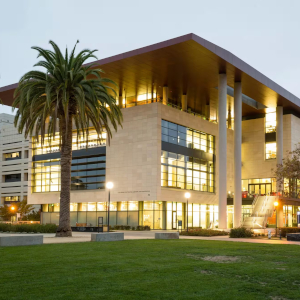
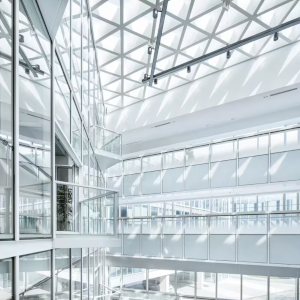
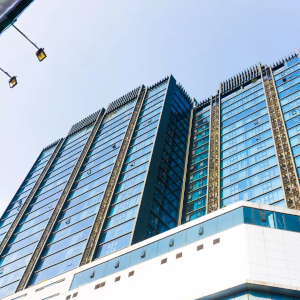
Commercial Window Tint Gallery
Commercial Window Film Glossary & Terms
VLT (Visible Light Transmission)
The percentage of visible light that passes through the glass and film combined. Commercial applications typically range from 20% VLT (privacy-focused) to 80% VLT (maximum daylight). Different floors or zones can use different VLT levels while maintaining a uniform exterior appearance.
TSER (Total Solar Energy Rejected)
The total percentage of solar energy (UV + visible light + infrared) that the film blocks. TSER is the most comprehensive measure of a film’s heat-rejection performance and the primary metric used to calculate HVAC savings. XPEL Clear View Plus achieves up to 86% TSER.
Security Film
A thick, reinforced window film (typically 8–15 mil) designed to hold glass together when shattered. Security films meet ANSI Z97.1 and CPSC 16 CFR 1201 standards for impact resistance, making them suitable for retail, ground-floor offices, and buildings in seismic zones.
Curtain Wall
A non-structural glass facade is common in modern commercial buildings. Curtain wall systems require specialized film installation techniques to ensure proper adhesion and thermal compatibility. XPEL films are engineered to work with curtain wall glass without causing thermal stress.
Low-E Glass (Commercial)
Low-emissivity glass is used in many modern commercial buildings to reflect heat. XPEL commercial films are compatible with Low-E coatings and can be layered on top to provide additional heat rejection, UV protection, and security without compromising the existing glass performance.
Nano-Ceramic Technology
A premium film construction using nano-scale ceramic particles to block heat and UV rays without metallic components. This means zero interference with Wi-Fi, cellular, Bluetooth, security systems, or point-of-sale equipment, a critical advantage for modern commercial spaces. The same technology powers our automotive ceramic window tint installations.
Solar Heat Gain Coefficient (SHGC)
The fraction of solar radiation admitted through a window that is converted into heat. A lower SHGC means less heat gain. Commercial window film significantly lowers the SHGC of existing glass, improving energy performance without the cost and disruption of full window replacement.
Payback Period
The time it takes for energy savings from window film to equal the installation cost. For most Concord commercial properties, the payback period is 2.5–7 years, after which HVAC savings become pure profit for the remaining 15–25 year lifespan of the film.