
Window Tinting Knowledge Hub
Automotive Window Tint Complete Guide
Everything Bay Area drivers need to know about automotive window tinting, from the science behind ceramic film and California’s legal limits to our XPEL installation process and long-term care tips. This is your single resource for making a confident, informed decision.
Why Choose Window Tint?
Concord averages over 260 sunny days a year, and summer temperatures regularly push past 95°F. Without tint, your vehicle’s cabin can climb above 140°F when parked in direct sunlight. High-performance ceramic film rejects infrared energy that creates heat, dramatically lowering interior temperatures and reducing the load on your air conditioning.
Ultraviolet radiation doesn’t just fade your dashboard and leather; it’s a leading cause of skin damage. Quality window tint blocks up to 99% of UV rays, acting as an invisible sunscreen for you and your passengers every time you drive. The Skin Cancer Foundation recognizes XPEL ceramic films as part of a comprehensive UV protection program.
Blinding morning glare on Highway 4 and harsh afternoon sun along I-680 create real safety hazards. Window tint cuts glare so you can see the road clearly, and the film’s adhesive layer helps hold shattered glass together in an accident or break-in attempt, adding a meaningful layer of protection for everyone in the vehicle.
Aftermarket Ceramic Tint vs. Factory Tint vs. No Tint
Aftermarket Auto Tint
OEM Factory Tint
No Tint
Dive deeper into Window Tinting knowledge
Window Tint Articles
Auto Window Tint Benefits
UV Ray Defense
Ceramic window film blocks up to 99% of harmful UVA and UVB radiation. This protects your skin during daily commutes and prevents your dashboard, seats, and trim from cracking, fading, and deteriorating under constant sun exposure.
Shatter Resistance
The film’s adhesive bonds to the glass and holds fragments together if a window breaks, whether from an accident, road debris, or an attempted break-in. This reduces the risk of injuries from flying glass and makes smash-and-grab theft significantly harder.
Interior Preservation
Sun damage is cumulative and irreversible. Window tint acts as a constant shield for your leather, fabric, and plastics, keeping your interior looking newer for longer and helping maintain your vehicle’s resale value.
Heat Rejection
Advanced ceramic particles in XPEL Prime XR and XR PLUS film block infrared energy at the molecular level, rejecting up to 98% of heat-producing IR rays. Your cabin stays cooler, your A/C runs less, and you use less fuel on hot Bay Area days.
Glare Reduction
Tint reduces the blinding glare that makes driving uncomfortable during sunrise and sunset commutes. You’ll experience less eye fatigue and better visibility without needing dark lenses or squinting through intersections.
Signal-Friendly Technology
Because ceramic film is non-metallic, it won’t interfere with your cell service, GPS navigation, Bluetooth connectivity, satellite radio, or FasTrak transponder, unlike older metalized tint films.
$1,000+
Potential A/C & Fuel Savings
Reduced cabin heat means less A/C strain and better fuel economy over the life of your vehicle.
Higher Resale Value
Protected Interior
Vehicles with preserved interiors and transferable tint warranties
10+ Years
Long-Term Investment
XPEL ceramic film is backed by a lifetime warranty and built to last the life of your vehicle without fading or bubbling.
Dive deeper into Window Tinting knowledge
Window Tint Articles
Frequently Asked Questions
Answers to the questions our Concord customers ask most before booking a tint appointment.
What are the window tint laws in California?
California requires front side windows to allow at least 70% VLT (visible light transmission). Only a non-reflective strip is permitted on the top four inches of the windshield. The rear side windows and the back window can be as dark as you want. Red, amber, and blue film colors are banned, as are mirror-like reflective finishes. If you tint the rear window, your vehicle must have dual side mirrors. Medical exemptions are available but require a physician’s letter and DMV documentation, and the tint must still allow at least 35% VLT.
How dark should I go?
It depends on your priorities. For front side windows, you’re limited to a very light ceramic film (around 70–80% VLT) to stay legal in California. On the rear windows, most Bay Area customers choose 15–20% VLT for a good balance of privacy and visibility, or 5% (“limo tint”) for maximum privacy. Remember, darker isn’t always better for heat rejection ceramic technology blocks infrared heat regardless of shade, so even a lighter tint can keep your car significantly cooler.
Will window tint void my car's warranty?
No. Aftermarket window tint installed by a certified professional will not void your vehicle warranty under the Magnuson-Moss Warranty Act. The dealer would have to prove that the tint directly caused a specific failure, which is extremely rare. XPEL films are tested for compatibility with vehicle safety systems, including side-curtain airbags.
Installation Process
Step 1
We start by discussing your goals, whether that’s maximum heat rejection, privacy, legal compliance, or all three. We’ll show you the differences between XPEL Prime CS Black, XR, and XR PLUS with a live heat lamp demo so you can feel the performance firsthand, and we’ll confirm which VLT levels are legal for your specific vehicle type.
Step 2
Every window is thoroughly cleaned inside and out to remove dirt, oils, and contaminants that could cause bubbles or adhesion problems. We inspect the glass for any existing damage and prep the interior seals so the film tucks cleanly into every edge.
Step 3
Using XPEL’s Design Access Program (DAP), each panel of film is computer-cut to your vehicle’s exact specifications, with no freehand blade work on your glass. The film is applied to the interior of each window with a slip solution, then carefully squeegeed to eliminate air and moisture for a seamless, bubble-free finish.
Step 4
Before you leave, we inspect every window under multiple lighting conditions to confirm the film is properly adhered to with no imperfections. We verify VLT compliance using a tint meter, provide your XPEL warranty certificate, and walk you through the post-installation care timeline so you know exactly what to expect during the curing period.
Standard Window Tint vs. Ceramic Tint: Which Is Right for You?
Understanding the key differences to make the best choice
- Lower upfront cost
- Moderate glare reduction
- Limited heat rejection (absorbs, doesn’t reflect)
- Fades and discolors over 3–5 years
- May interfere with electronic signals (metalized types)
- Partial UV protection
Dive deeper into Window Tinting knowledge
Window Tint Articles
Investment & Lifespan
Starting at ~$250
Great value for drivers who want a clean, dark look with solid UV protection and glare reduction. Ideal if privacy and aesthetics are your top priorities.
Starting at ~$400
Our most popular option. Advanced ceramic technology delivers 85% heat rejection, 99% UV protection, and excellent optical clarity. The sweet spot for Bay Area drivers.
Starting at ~$600
The best ceramic tint on the market. Up to 98% infrared rejection, SPF 1,000-level UV defense, and unmatched clarity. For drivers who want the absolute best.
Dive deeper into Window Tinting knowledge
Window Tint Articles
Care & Maintenance
Keep your window tint performing and looking its best with these simple care habits.
First 7 Days After Installation (Curing Period)
- Do not roll your windows down for 3–5 days (up to 7 in cooler weather) to allow the adhesive to fully bond
- Do not clean the interior side of your tinted windows during the curing period
- Small water bubbles and slight haziness are completely normal they will disappear as the moisture evaporates
- Do not try to smooth bubbles or pick at the film edges
Monthly Maintenance
- Inspect film edges for any lifting, especially along door seals and defroster lines
- Remove bird droppings, tree sap, or bug residue promptly, and soak with soapy water before wiping
- Avoid stickers or decals on tinted surfaces removal can damage the film
- If using a car wash, choose touchless only brush washes, as they can scratch and lift film edges
Ongoing Weekly Care
- Use only ammonia-free glass cleaner (ammonia degrades tint film and adhesive)
- Clean with a soft microfiber cloth, never paper towels, newspapers, or abrasive pads
- Wipe in straight, gentle strokes rather than circular scrubbing
- Clean in the shade, direct sunlight causes the cleaner to dry too fast and streak
Dive deeper into Window Tinting knowledge
Window Tint Articles
PPF Gallery
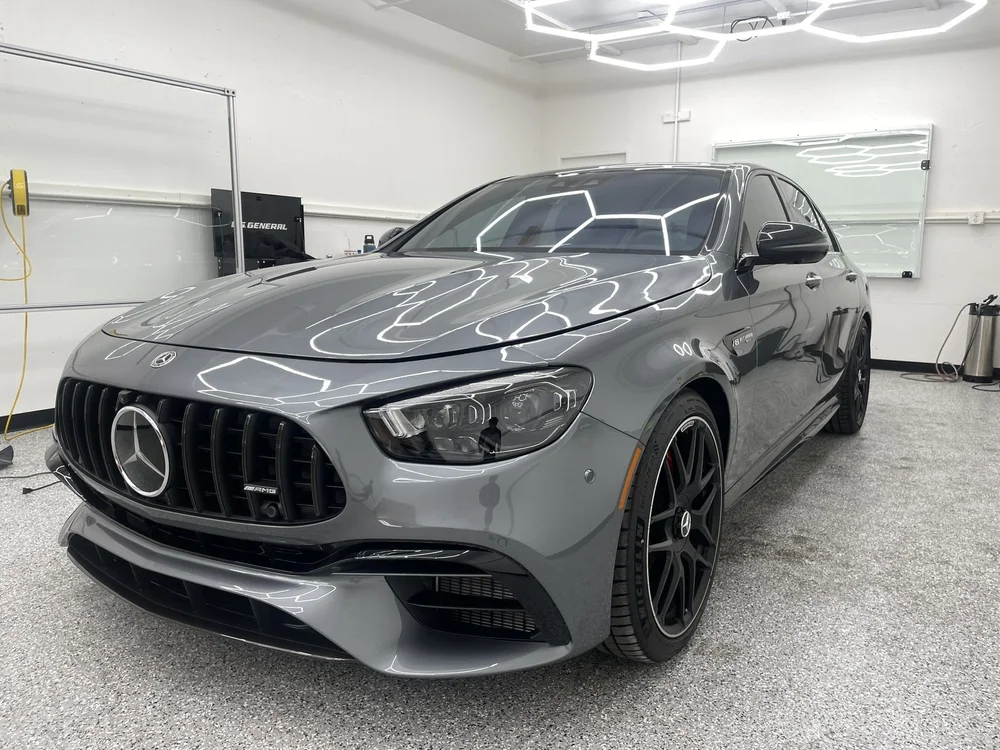
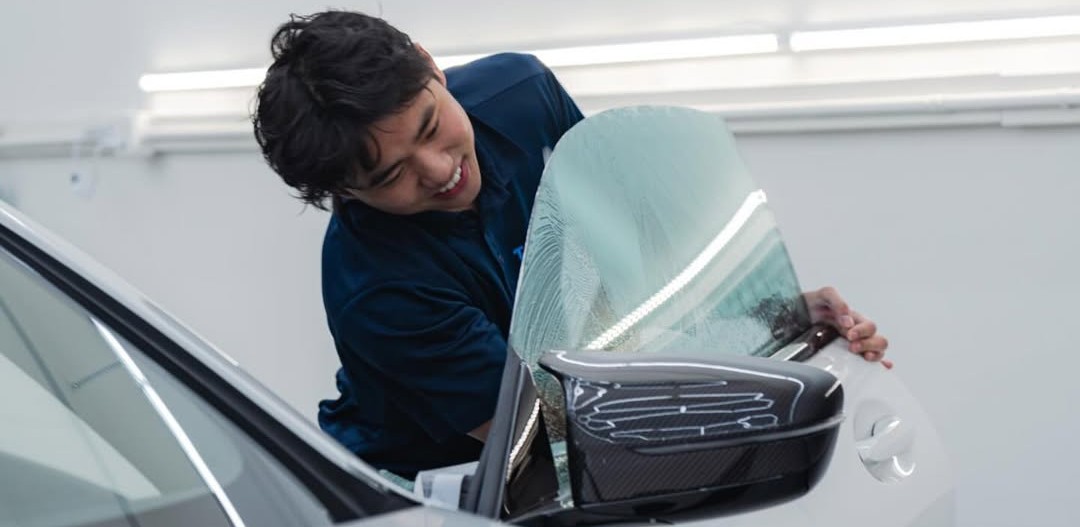
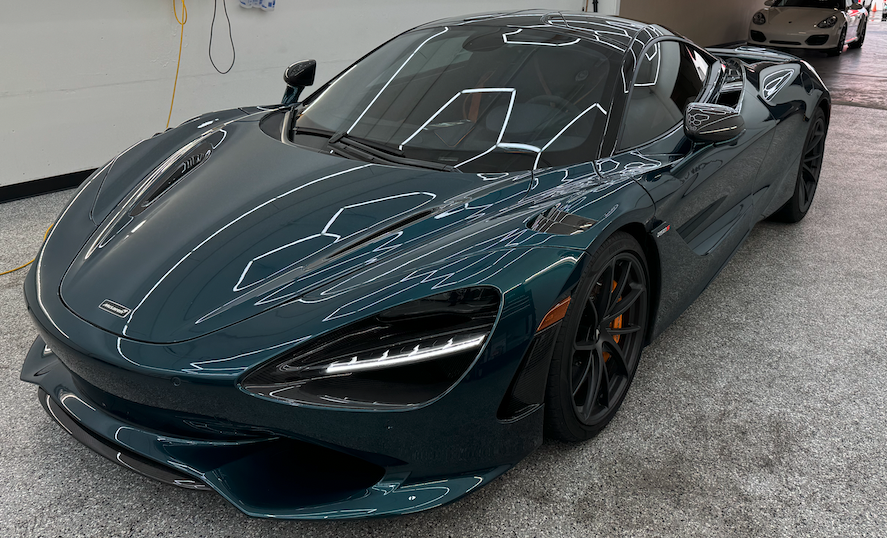
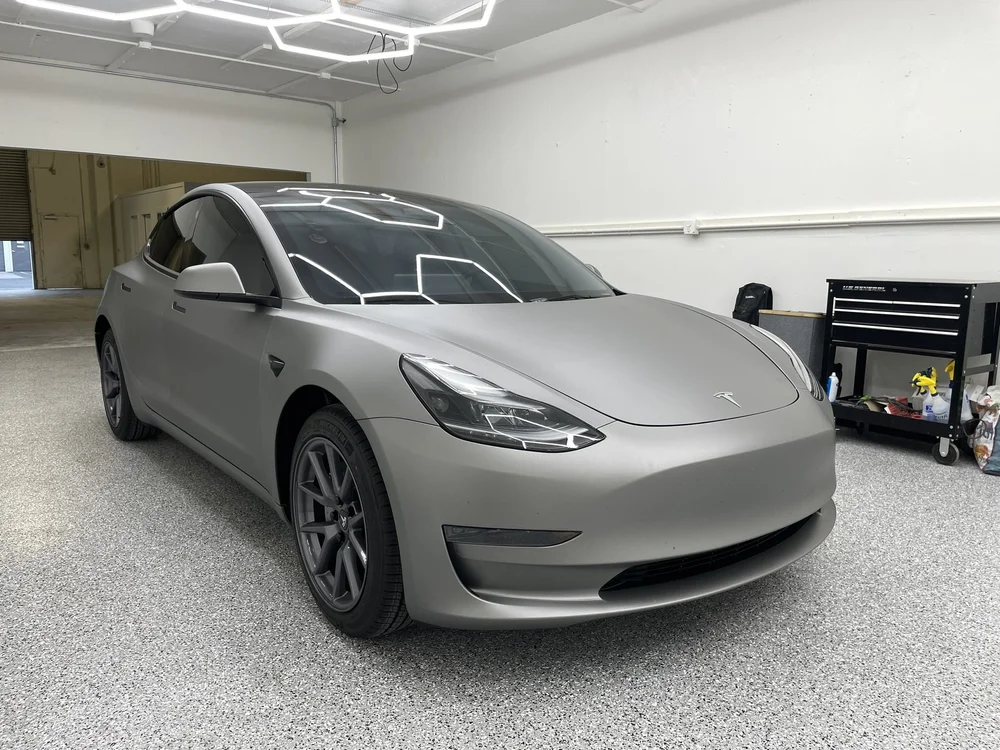
Dive deeper into Window Tinting knowledge
Window Tint Articles
Window Tint Glossary & Terms
VLT (Visible Light Transmission)
The percentage of visible light that passes through your window and the tinted film combined. A lower number means a darker tint. California requires front side windows to maintain at least 70% VLT.
Infrared Rejection (IR)
The percentage of infrared radiation (the part of sunlight that produces heat) that the film blocks. XPEL Prime XR PLUS rejects up to 98% of IR energy, which is what makes ceramic tint dramatically cooler than standard film.
Ceramic Film
A premium window tint that uses nano-ceramic particles embedded in the film to block heat and UV rays. Unlike dyed or metalized films, ceramic tint won’t fade, won’t interfere with electronics, and maintains optical clarity over time.
Dyed Film
An entry-level tint that uses dye layers to darken the glass. Provides privacy and some glare reduction at a lower cost, but offers limited heat rejection and tends to fade or turn purple after a few years.
Metalized Film
A tint containing metallic micro-particles that reflect heat away from the vehicle. Offers good heat rejection but has a shiny, reflective appearance and can interfere with cell phone, GPS, Bluetooth, and radio signals.
Carbon Film
A mid-range tint made with carbon particles that block infrared light effectively. Offers better heat rejection than dyed film without the signal interference of metalized film. Produces a matte, dark finish.
Curing
The drying and bonding period after tint installation. Moisture trapped between the film and glass evaporates over 3–14 days, depending on temperature and humidity. Bubbles and haziness during curing are normal and temporary.
DAP (Design Access Program)
XPEL’s proprietary computer-cutting system that precision-cuts film to your vehicle’s exact window dimensions using a database of over 120,000 vehicle patterns. Eliminates on-car cutting for cleaner edges and faster installation.
AS-1 Line
A marking on your windshield that indicates where the top tint strip is legally allowed. In California, you can apply non-reflective tint above this line or on the top four inches of the windshield, whichever is present.
SPF Rating (Window Film)
A measure of UV protection. XPEL Prime XR provides SPF 500-level protection, while XR PLUS reaches SPF 1,000. Both are recognized by The Skin Cancer Foundation as effective UV defense.