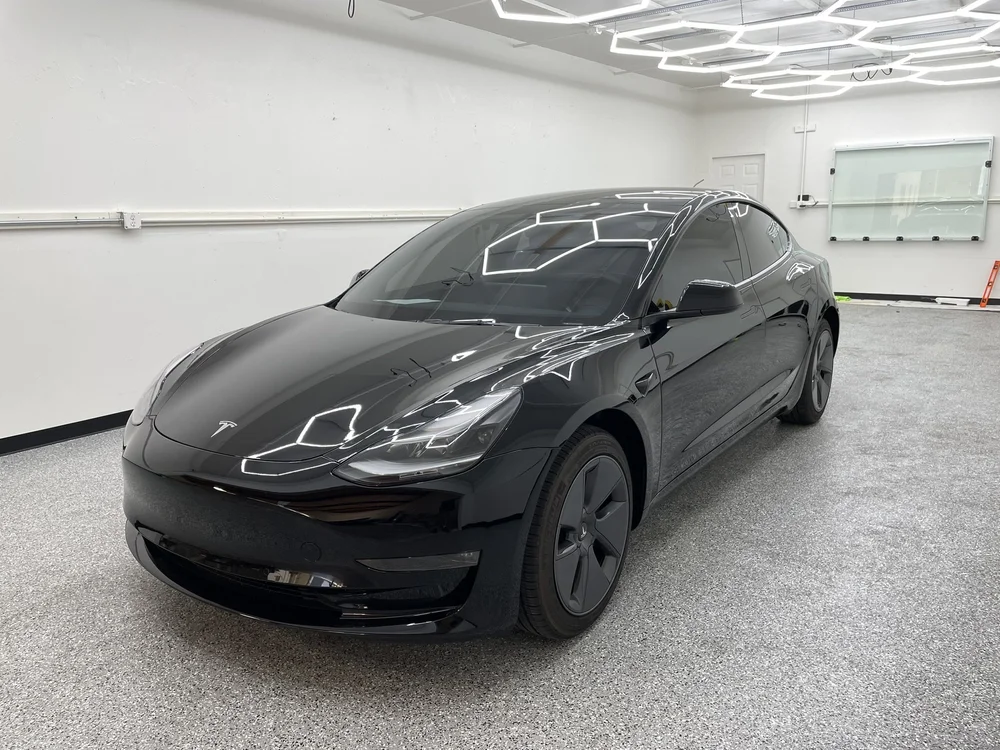

If you’re looking for professional Tesla window tint in Concord, Tru-Tints is the shop built for the job. As an XPEL Certified Specialist, we work with Tesla vehicles every week, and we understand the engineering details that make tinting a Model 3 or Model Y different from tinting any other car on the road.
From the expansive panoramic glass roof to the curved rear-window geometry, every Tesla presents installation challenges that require specific experience, the right film, and precise technique. We exclusively install XPEL PRIME ceramic window film, the same brand Tesla’s own accessories shop carries, and we back every installation with our shop warranty. Ready to schedule? Request a quote or call us at (925) 476-4907.
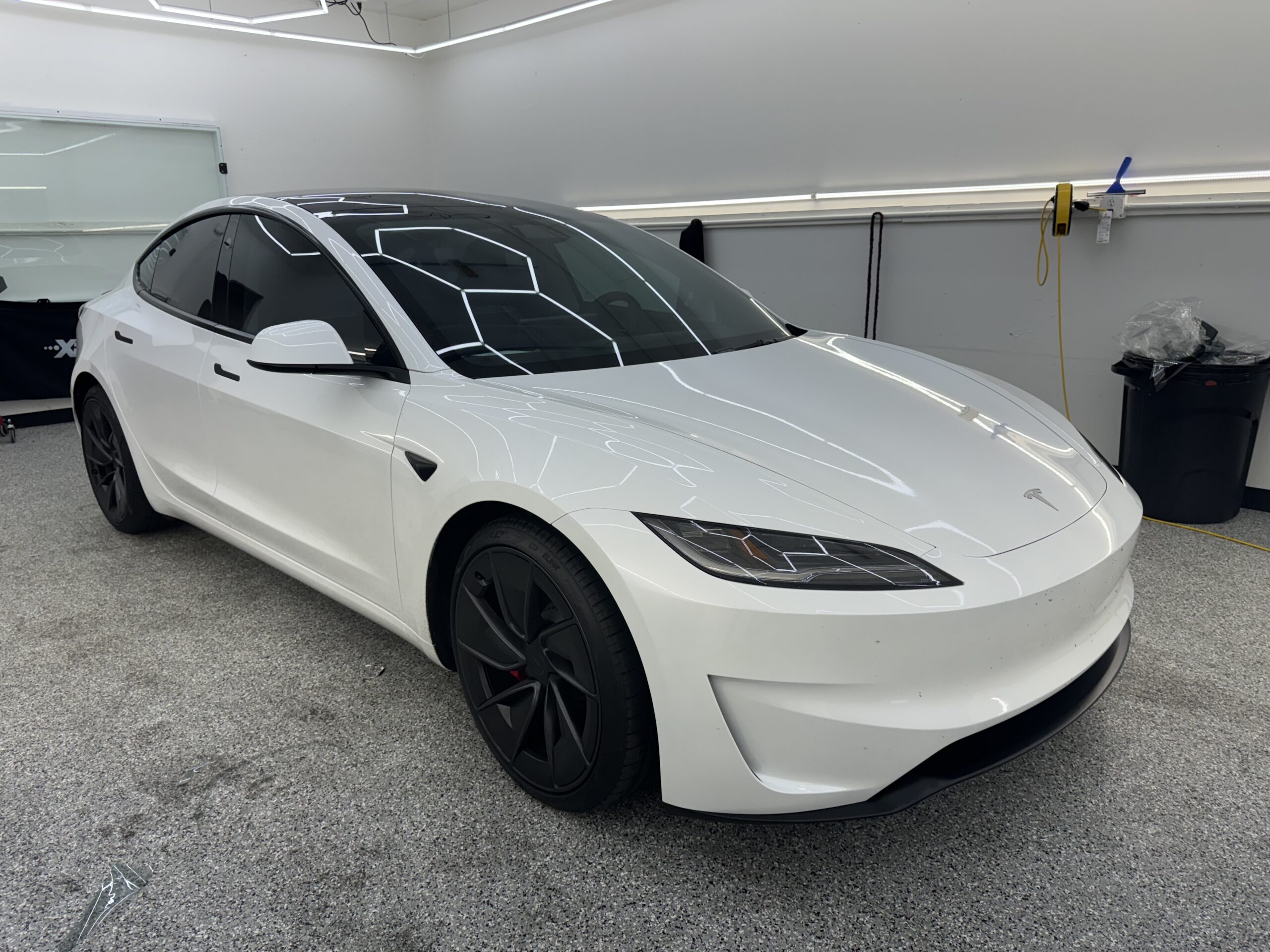
Why Tesla Owners in Concord Need Professional Ceramic Window Tint
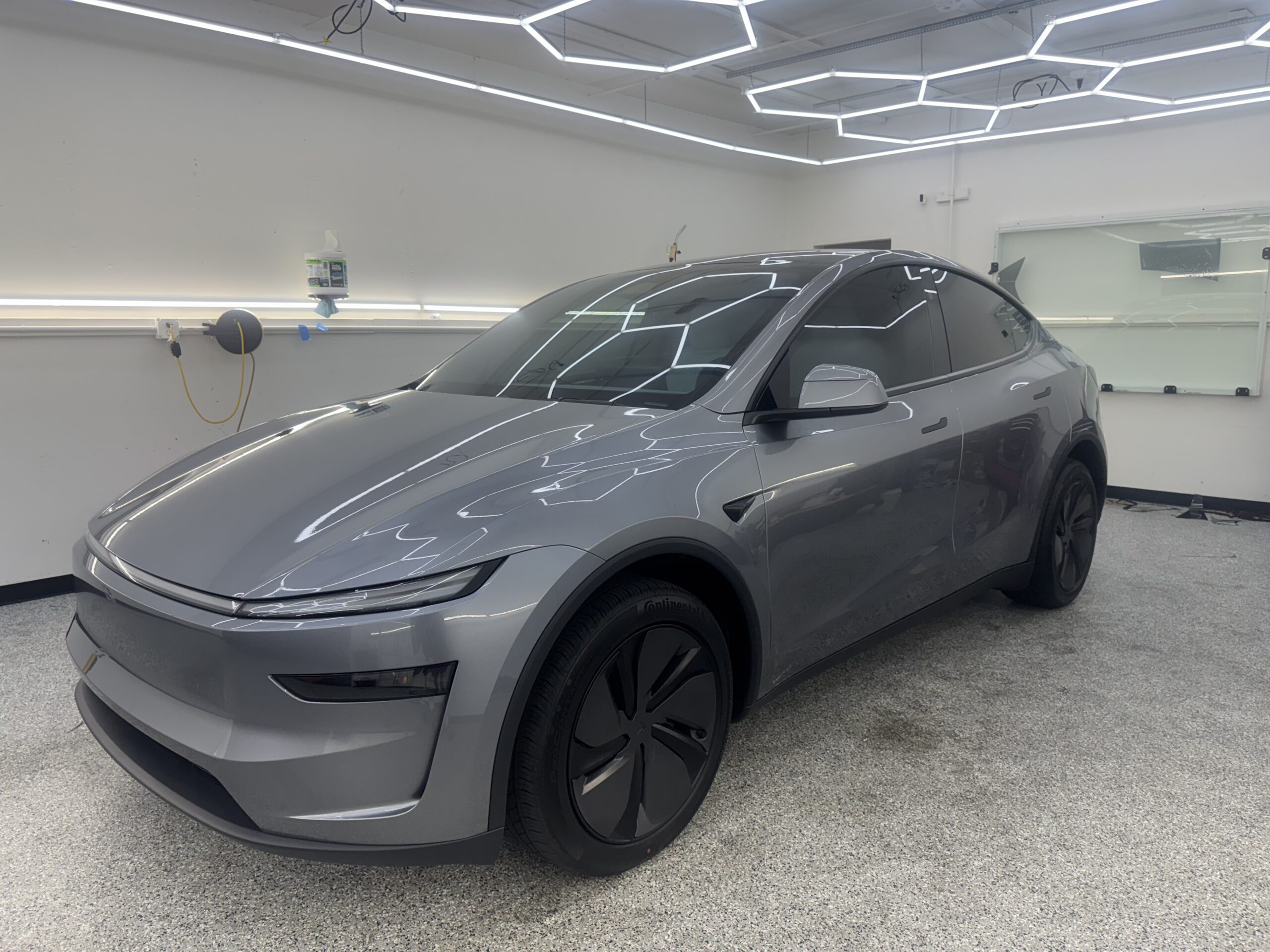
Tesla’s glass technology is impressive. The panoramic roof on the Model 3 and Model Y uses multi-layer coatings that block approximately 99% of UV radiation, according to Tesla’s published specifications. But UV rejection and heat rejection are not the same thing. Tesla’s factory glass does relatively little to stop infrared radiation (IR), the invisible wavelengths responsible for over 53% of total solar energy reaching your cabin, per the National Renewable Energy Laboratory’s reference solar spectrum.
That distinction matters in Concord and the broader Contra Costa County inland corridor. Summer temperatures here routinely climb into the mid-90s, and without physical shade or supplemental IR protection, a Tesla parked in direct sun can see interior temperatures exceed 140°F. That heat accelerates wear on interior surfaces, strains the climate system (reducing your driving range), and makes the cabin uncomfortable for passengers even after the AC engages.
Professional ceramic window tint solves the problem that factory glass doesn’t fully address: infrared heat. XPEL PRIME XR PLUS, for example, rejects up to 98% of infrared energy, dramatically lowering interior temperatures, reducing HVAC load, and preserving your Tesla’s battery range during the hottest months on the I-680 corridor.
The UV Exposure Risk Most Drivers Underestimate
Even with Tesla’s roof glass blocking UV effectively, the side windows tell a different story. A 2016 study published in JAMA Ophthalmology tested 29 vehicles from 15 manufacturers and found that front windshields blocked an average of 96% of UVA rays, while side windows blocked only about 71%. Some side windows allowed nearly 56% of UVA radiation to pass through.
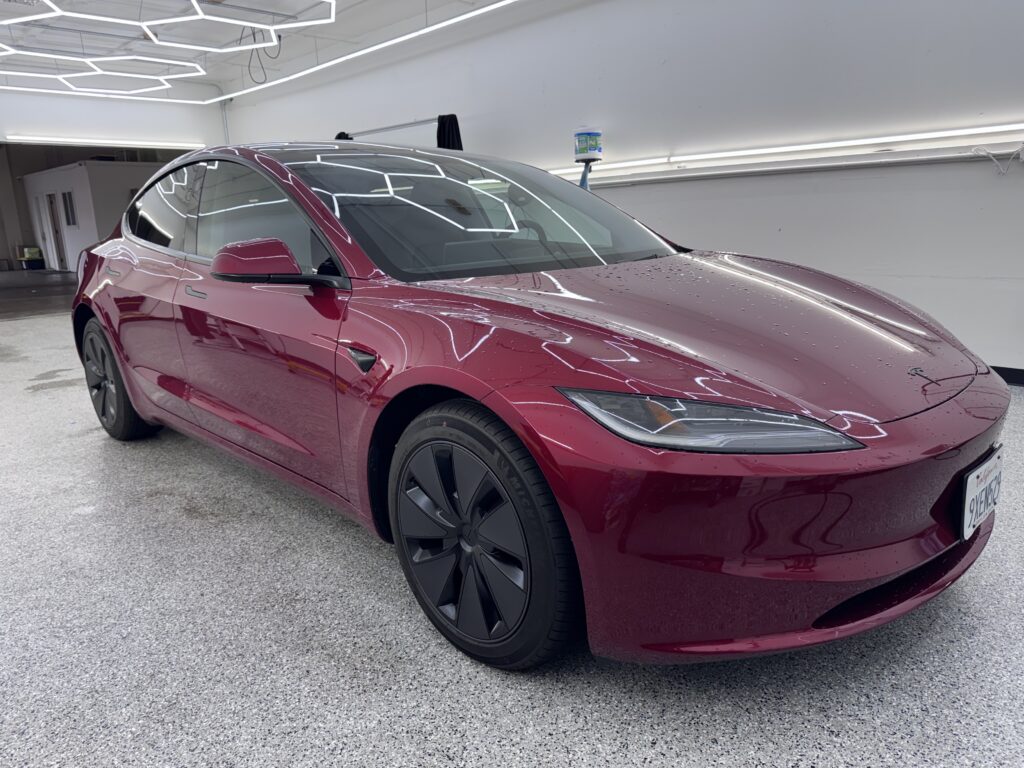 The Skin Cancer Foundation notes that up to 50% of UVA radiation can penetrate standard untreated side window glass and that melanoma and nonmelanoma skin cancers are statistically more common on the left (driver’s) side of the body in U.S. drivers. For Tesla owners who commute daily along Highway 4 or I-680, that cumulative exposure adds up.
Ceramic window film is applied to all side glass, and the rear window closes that gap. Every XPEL PRIME film blocks over 99% of both UVA and UVB radiation, and each film in the PRIME lineup carries the Skin Cancer Foundation’s Seal of Recommendation as an effective UV protectant.
XPEL PRIME Ceramic Film Options for Your Tesla
We offer three tiers of XPEL PRIME ceramic film, each with different levels of infrared heat rejection. Here’s how they compare:
| Specification | CS BLACK | PRIME XR | PRIME XR PLUS |
|---|---|---|---|
| Film Technology | Color-stable dyed | Nano-ceramic | Multi-layer nano-ceramic |
| Infrared Heat Rejection | Up to 15% | Up to 85% | Up to 98% |
| UV Rejection | 99%+ | 99%+ | 99%+ |
| Signal Interference | None (non-metallic) | None (non-metallic) | None (non-metallic) |
| UV Protection Rating | SPF 500 | SPF 1,000 | SPF 1,000 |
| Best For | Privacy + UV protection on a budget | Strong heat rejection for daily driving | Maximum heat control; ideal for panoramic roofs |
| Skin Cancer Foundation Seal | Yes | Yes | Yes |
| XPEL Warranty | Lifetime limited | Lifetime limited | Lifetime limited |
Data source: XPEL official product specifications (xpel.com). IR rejection measured at 1025nm per XPEL’s published spec sheet methodology. Performance tolerances ±3%.
For most Tesla owners in Concord, we recommend PRIME XR or PRIME XR PLUS for the side windows and panoramic roof. The difference in IR rejection between these two tiers is substantial. XR rejects about 85% of infrared heat, while XR PLUS pushes that to 98%. In the inland heat of Contra Costa County, that 13-point gap translates to noticeably lower cabin temperatures and less strain on your Tesla’s HVAC system.
What Makes Tinting a Tesla Different
Tesla vehicles are not like traditional cars when it comes to window tint installation. Several design elements require specialized knowledge and techniques that general tint shops often don’t account for:
Panoramic Glass Roof
The full glass roof on the Model 3 and Model Y is a single piece of tempered, laminated glass spanning from the windshield header to the rear trunk line. It’s one of the largest glass panels in the automotive industry, and its compound curvature demands precise heat-shrinking during installation.
Rear Window Curvature
Tesla’s rear glass has a steep curvature, making a single-piece application more demanding than on most vehicles. The defroster grid lines embedded in the glass add another variable; improper technique can trap air beneath the film along these lines. We install the rear window as a single piece (no seams) and use controlled heat-shrinking to conform the film to the glass contour without distortion.
Factory Glass Coatings
Tesla applies proprietary coatings to its glass, including the UV-reflective layers on the panoramic roof. These coatings can affect adhesion if the wrong film or prep solution is used. XPEL PRIME films are specifically formulated to bond properly on coated OEM glass, and our prep process is calibrated for Tesla’s glass chemistry.
Sensors and Electronics
Tesla vehicles rely heavily on cameras, radar, and sensors positioned around the cabin. The Autopilot camera cluster sits behind the windshield, and the cabin camera is mounted above the rearview mirror. XPEL PRIME films are non-metallic, which means zero interference with GPS, cellular, Bluetooth, key fob signals, or Tesla’s Autopilot and connectivity systems. Metallic tint films still sold by some shops can degrade these signals.
California Window Tint Laws for Tesla Owners
California’s window tint regulations under Vehicle Code Section 26708 are among the strictest in the country. Here’s what Tesla owners need to know:
| Window Position | California Legal Requirement | What This Means for Your Tesla |
|---|---|---|
| Windshield | Non-reflective tint on top 4–5 inches only | A clear ceramic strip (e.g., XPEL XR PLUS 70%) can be applied for heat rejection without darkening |
| Front Side Windows | Must allow 70%+ VLT (aftermarket film must be 88%+ VLT) | Only near-clear ceramic films comply; use XR PLUS 70% for maximum legal heat rejection |
| Rear Side Windows | No VLT restriction | Any shade from 5% to 70% is legal; choose based on privacy and heat goals |
| Rear Window | No VLT restriction (dual mirrors required) | All Teslas have dual mirrors as standard, so any shade is compliant |
| Panoramic Roof Glass | Not specifically regulated for VLT | Ceramic film on the roof is one of the highest-impact upgrades for heat control |
Source: California Vehicle Code § 26708; California DMV.
We verify every installation with a tint meter before your Tesla leaves the shop to ensure full compliance. If you have questions about shade options or legal limits, we will walk you through everything during the quoting process.
Our Shop Warranty: Coverage Beyond the Film
Every Tesla window tint installation at Tru-Tints is backed by two layers of protection. First, XPEL’s manufacturer warranty covers defects in the film itself, peeling, bubbling, cracking, discoloration, or delamination for the lifetime of the product.
Second, our shop warranty covers a situation that no film manufacturer’s warranty does: if your window glass is broken during a theft attempt or a traffic stop and the tint is damaged in the process, we’ll replace the film on the affected window. This is a real concern for Bay Area Tesla owners. Vehicle break-ins remain a persistent issue in the region, and you won’t find coverage for them at most tint shops.
Why XPEL Certification Matters for Your Tesla
When you search for Tesla window tint online, you’ll notice that Tesla’s own accessories store, shop.tesla.com, sells XPEL tint. That’s not a coincidence. XPEL is the brand Tesla trusts for its customers. But buying the film is only half the equation. How it’s installed determines whether you get a flawless result or visible defects.
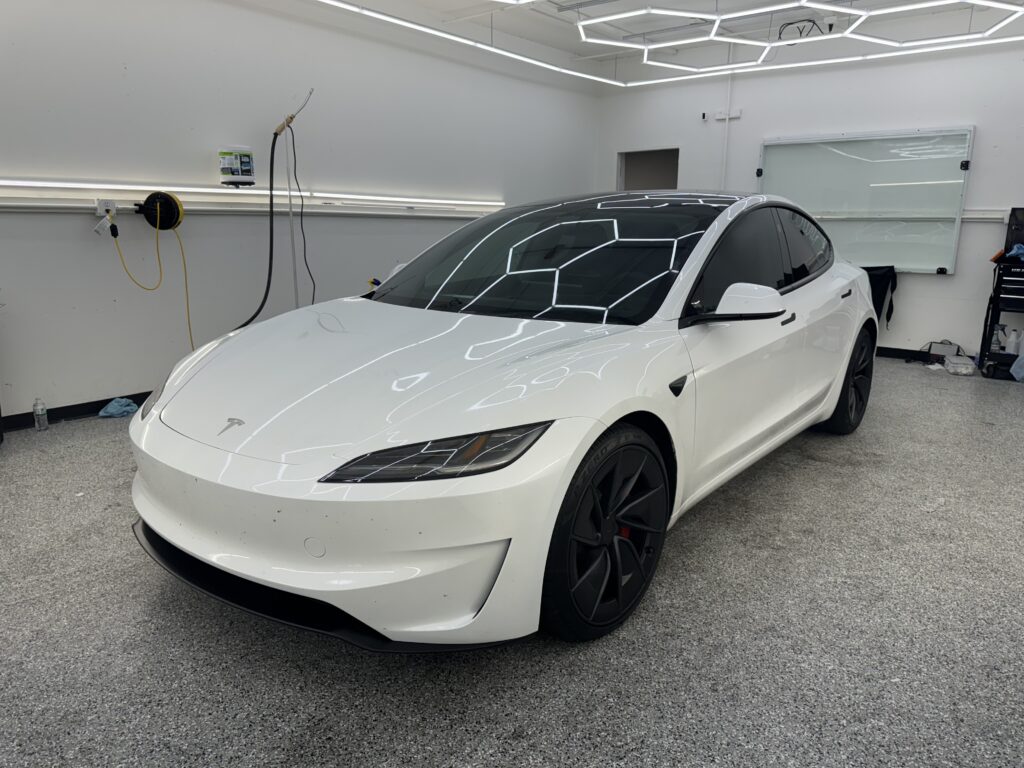
As an XPEL Certified Specialist, Tru-Tints has completed XPEL’s training and certification program, which covers proper application techniques, material handling, and vehicle-specific protocols for brands like Tesla. We also have access to XPEL’s DAP pattern database the same system XPEL uses to ensure every cut matches your vehicle’s exact glass dimensions. Certification means accountability: XPEL tracks certified installers, and our work is tied to our reputation within the XPEL network.
Tesla Models We Tint at Our Concord Shop
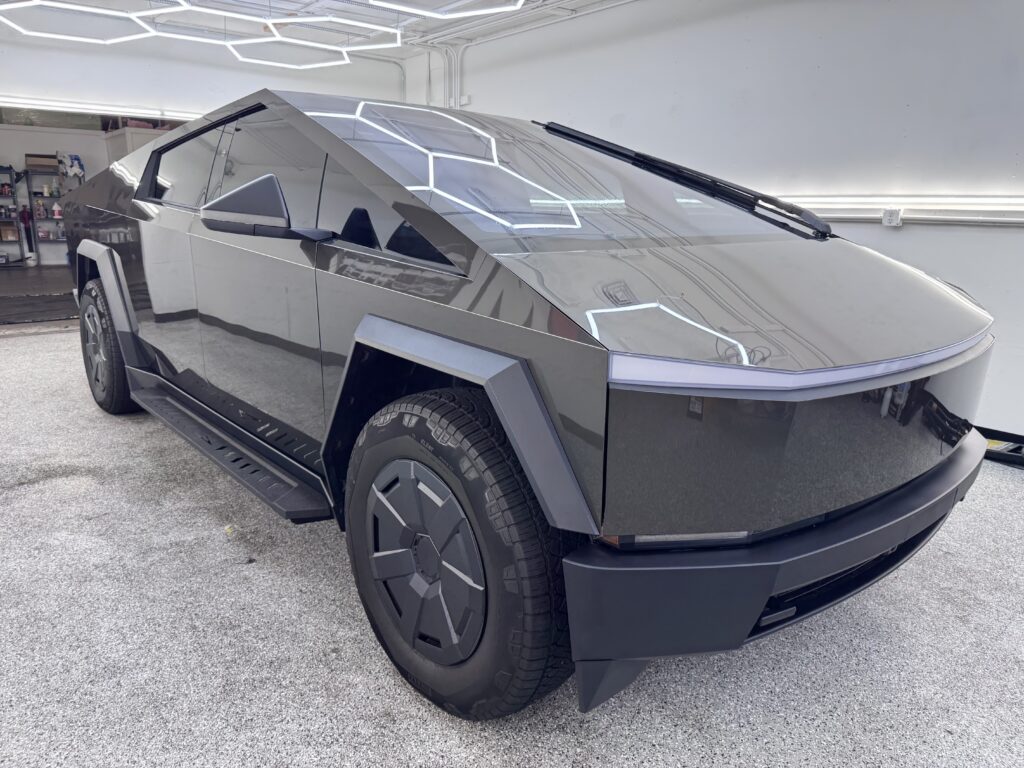
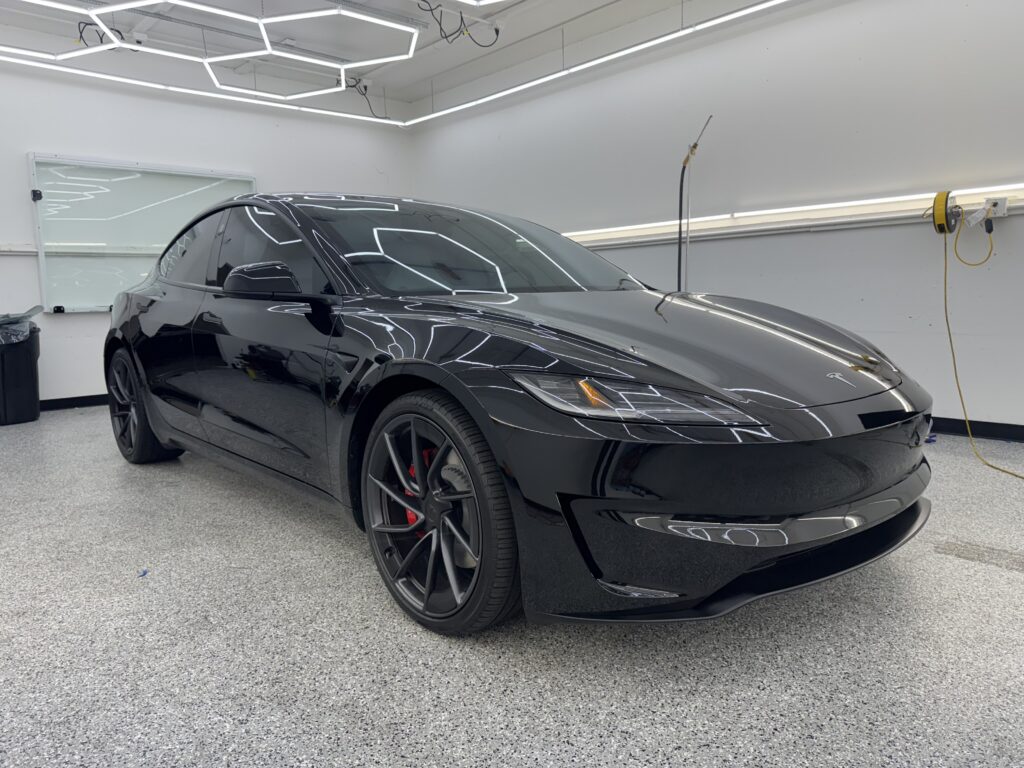
We install XPEL PRIME ceramic film on every current Tesla model. While the Model 3 and Model Y make up the majority of Tesla tint jobs at our Concord shop, we also work on the Model S, Model X, and Cybertruck. Each model has its own glass geometry and installation requirements our team is familiar with all of them.
Common Tesla tinting configurations our customers choose include full side glass and rear window tinting (the most popular package), panoramic roof ceramic film for heat control, clear ceramic film on front side windows for heat rejection within legal limits, and windshield strip applications. Every configuration is customized during the quoting process based on your priorities, whether that’s maximum heat rejection, privacy, aesthetics, or a combination.
Serving Tesla Owners Across Contra Costa County
Our shop is located at 1281 Franquette Ave, Suite B, in Concord, centrally positioned to serve Tesla owners across the Contra Costa County inland corridor. We regularly work with customers from Walnut Creek, Pleasant Hill, Martinez, Antioch, Pittsburg, and the Lamorinda area (Lafayette, Moraga, Orinda). If you’re anywhere along the I-680 or Highway 4 corridor, we’re an easy drive.
Concord’s inland climate makes ceramic tint particularly valuable compared to coastal Bay Area cities. Summer highs here average 10–15°F warmer than San Francisco, and the UV index regularly reaches “Very High” (8+) from May through September. That’s the environment where high-performance ceramic film earns its investment every day.
Frequently Asked Questions: Tesla Window Tinting
How long does it take to tint a Tesla Model 3 or Model Y?
A full tint installation on a Model 3 or Model Y typically takes 2–4 hours, depending on the number of windows and whether the panoramic roof is included. We use XPEL’s DAP computer-cut system to pre-cut every piece to your vehicle’s exact specs, reducing installation time and eliminating on-car cutting that could risk scratching your glass.
Will window tint affect my Tesla's Autopilot, cameras, or sensors?
No. XPEL PRIME films are completely non-metallic, so they do not interfere with Autopilot cameras, radar, ultrasonics, GPS, cellular connectivity, Bluetooth, or key fob range. This is one reason we exclusively use XPEL; some older or cheaper metallic tint films can degrade signal quality on electronics-heavy vehicles like Teslas.
Does tinting my Tesla's panoramic roof make a noticeable difference?
Yes, substantially. Tesla’s roof glass blocks UV effectively but is less effective at rejecting infrared heat. Applying XPEL PRIME XR PLUS to the panoramic roof can reflect up to 98% of IR energy, directly reducing hot-spot temperatures in the cabin (especially for rear passengers) and lowering the load on your HVAC system. In Concord’s summer heat, owners consistently report a noticeable difference in comfort after roof tinting.
What shade should I choose for my Tesla in California?
California law requires front side windows to maintain at least 70% VLT (visible light transmission). Rear side windows and the rear window have no darkness restriction. Most of our Tesla customers choose 15–30% on the rear glass for a combination of privacy and heat rejection, and a clear or near-clear ceramic film on the front side windows to stay legal while still gaining heat protection. We’ll help you choose the right combination during the quoting process.
How soon can I roll my windows down after installation?
We recommend waiting 3–5 days before rolling down any tinted windows. In Concord’s warm, dry climate, the film cures faster than in cooler or more humid environments. You may see small water pockets or slight haziness during the first few days. This is normal and will clear as the adhesive fully bonds to the glass.
Customer Testimonials
Our customers in their own words on our tinting services.